HomeBlog › Ingredient Science

Ingredient Science

What Adaptogens Actually Are (and What They Aren't)

“Adaptogen” is one of the most abused words in supplements. Here is what it originally meant.

Written by the Horsewood Editorial Desk Checked against the current bottle label Updated 6 August 2026 Cited: NIH ODS, NCCIH, FDA, FTC

On this page

  1. Where the term came from
  2. Which botanicals are usually included
  3. What the evidence supports
  4. How the word gets misused
  5. The practical takeaway

Where the term came from

The word was coined in the Soviet Union in the mid-twentieth century by pharmacologist Nikolai Lazarev and developed further by Israel Brekhman. It described substances proposed to increase non-specific resistance to physical, chemical and biological stressors.

The original criteria were reasonably strict: non-toxic at normal doses, producing a non-specific response, and having a normalising effect regardless of the direction the body had drifted.

Which botanicals are usually included

  • Ashwagandha — the most researched of the group
  • Rhodiola rosea — studied mainly around mental fatigue
  • Panax ginseng — the longest commercial history
  • Eleuthero — Brekhman's original subject
  • Holy basil, schisandra and others — with weaker supporting data

What the evidence supports

Some adaptogens, ashwagandha in particular, have randomised human trials examining stress-related measures. Most have far less. The category label does not confer evidence on every member.

“Adaptogen” is a proposed mechanism class, not a proof of effect. A product describing itself as adaptogenic has told you what it is trying to do, not that it succeeds.

How the word gets misused

  • Applied to any plant with vaguely calming associations
  • Used to imply pharmaceutical-grade evidence where only traditional use exists
  • Presented as if “balances your body” were a measurable demonstrated outcome

The practical takeaway

Treat the word as a description of intent, then check the specific ingredient against a neutral source such as NCCIH Herbs at a Glance.

Horsewood — official website pricing

Men's vitality capsules with zinc, magnesium, ashwagandha and bacopa. The Horsewood discount runs from $49 per bottle with a 60-day money-back guarantee.

See the Horsewood discount
Disclaimer: this article is general information, not medical advice. Horsewood is a dietary supplement and is not intended to diagnose, treat, cure or prevent any disease. Individual results vary. For adults aged 18 and over. Talk to your doctor before starting any supplement, particularly if you take prescription medication.

Horsewood Editorial Desk

We write from the product label outward, tag each ingredient by evidence strength, and publish the unflattering parts too. See our editorial standards.

Keep reading

Answers

Frequently asked questions

No. They are generally studied over 8 to 12 weeks of consistent use rather than for acute effects.

No. Caffeine is a stimulant with a direct acute mechanism, close to the opposite of what the adaptogen concept describes.

This website may earn a commission on purchases made through links to the official Horsewood store, at no additional cost to you. Our editorial standards and affiliate disclosure are published in full on this site.

No. Horsewood is a dietary supplement and is not intended to diagnose, treat, cure or prevent any disease, including erectile dysfunction or low testosterone.
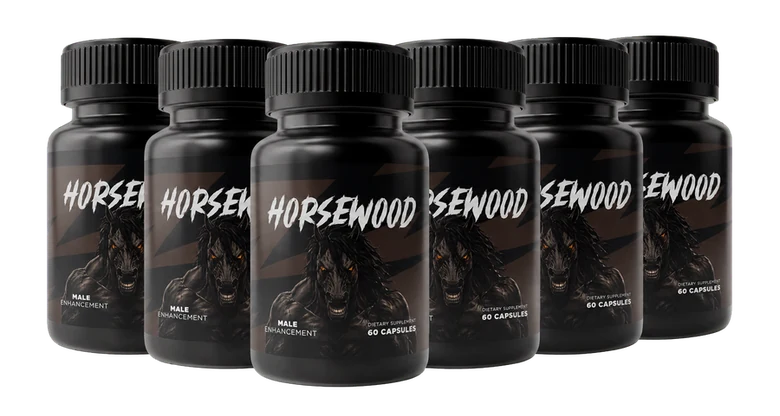
Horsewood six-bottle package at the official website sale price
Regular price: $99 per bottle
Today from $49 per bottle
Claim the Horsewood discount

Backed by the 60-day money-back guarantee. Secure checkout on the Horsewood official website.

Get the Horsewood Discount — From $49 60-day money-back guarantee • Official website only