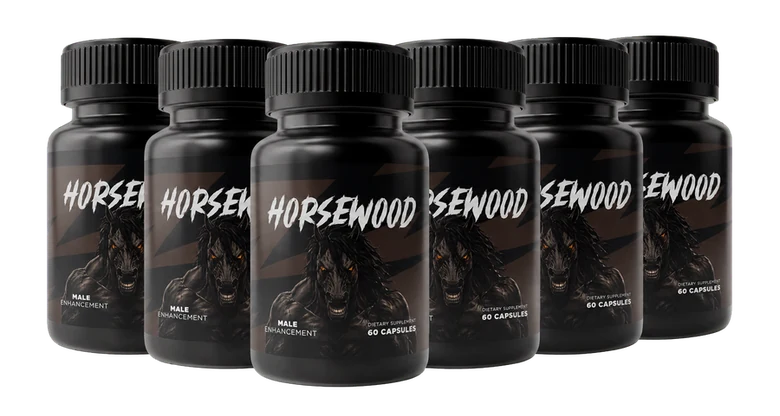
Regular price: $99 per bottle
Today from $49 per bottle
Claim the Horsewood discountBacked by the 60-day money-back guarantee. Secure checkout on the Horsewood official website.
An extract is what remains after raw herb is processed to concentrate its actives and discard inert plant matter. A smaller extract weight can represent a much larger quantity of original plant.
A ratio like 10:1 means ten grams of raw herb produced one gram of extract.
| Label says | Ratio | Raw-herb equivalent |
|---|---|---|
| 100 mg extract | 4:1 | 400 mg |
| 100 mg extract | 10:1 | 1,000 mg |
| 500 mg raw powder | 1:1 | 500 mg |
Some labels state a standardised percentage — “standardised to 5% withanolides” or “95% curcuminoids”. That specifies the concentration of a marker compound, which is more informative than a ratio alone.
A label giving both a ratio and a standardisation is being more transparent than one giving neither.
A blend prints one total covering several ingredients. It is legal and occasionally defensible as formula protection. It also makes it impossible to know whether the expensive ingredient is present meaningfully.
Individually named amounts signal confidence; a single blend total is a signal to ask why.
The number that decides cost per day, and the one most often overlooked. A 60-capsule bottle at one capsule daily is 60 days; at two capsules it is 30. That single figure halves or doubles your real cost.
The FDA dietary supplement overview is the primary source on what labels must state.
Men's vitality capsules with zinc, magnesium, ashwagandha and bacopa. The Horsewood discount runs from $49 per bottle with a 60-day money-back guarantee.
See the Horsewood discountBacked by the 60-day money-back guarantee. Secure checkout on the Horsewood official website.