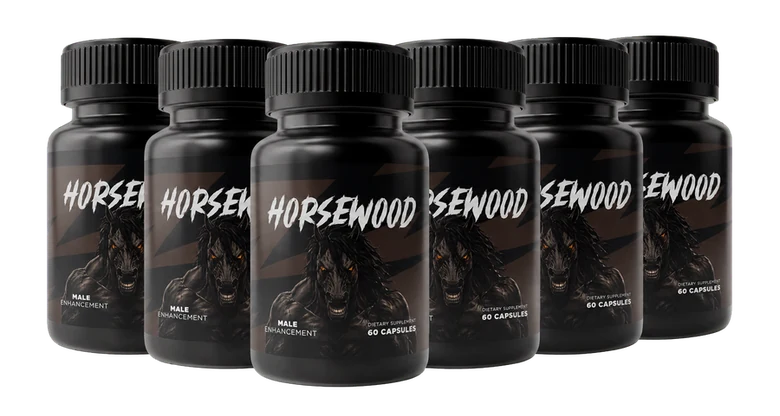
Regular price: $99 per bottle
Today from $49 per bottle
Claim the Horsewood discountBacked by the 60-day money-back guarantee. Secure checkout on the Horsewood official website.
Thirteen ingredients named individually on the official material: zinc, magnesium, ashwagandha, rhodiola, bacopa, ginkgo, maca, green tea extract, turmeric, grape seed extract, elderberry, echinacea and spirulina.
Naming is the first bar and this clears it. Several competing pages for the same product describe ingredient categories instead — “Adaptogenic Herb Complex” — which is worse.
Per-ingredient amounts. Standardisation percentages. Extract ratios. Capsule shell material. Whether the panel groups ingredients into a proprietary blend.
All five are things you would need to compare this against the research, and none is available before purchase.
So you can assess the panel when it arrives, here are the ranges commonly used in the studies behind the better-supported ingredients:
| Ingredient | Typical research range |
|---|---|
| Bacopa Monnieri | 300 mg daily, standardised extract, over 8-12 weeks |
| Ashwagandha | 300-600 mg daily, standardised root extract |
| Zinc | Reference intakes commonly 11 mg for adult men |
| Magnesium | Reference intakes commonly 400-420 mg for adult men |
| Ginkgo Biloba | 120-240 mg daily standardised extract |
These are indicative rather than definitive, and they exist here so you have something to compare against rather than nothing.
Add the research doses above and you exceed what a single daily capsule serving can physically carry, before you account for the other eight ingredients.
That is not an accusation — it is arithmetic that applies to every broad-spectrum formula. It means some ingredients here are necessarily below their researched ranges, and the honest question is which ones the formulator prioritised.
Since the criticism here is disclosure rather than formulation, it is worth noting that the problem is entirely solvable and some brands solve it.
The best practice looks like this: per-ingredient amounts printed on the sales page as well as the bottle; standardisation percentages stated for every extract where standardisation exists; the extract ratio given; and a batch certificate of analysis available on request or published by lot number.
That combination lets a buyer compare a product against the research literature before spending anything, which is the entire point. It also lets a buyer compare two products meaningfully, which is presumably why fewer brands do it than could.
The cost of doing it is small — a table on a web page and a testing relationship the manufacturer likely already has. The cost of not doing it is borne entirely by the buyer, in the form of a purchase made without the information needed to evaluate it.
When a brand in this category does publish a full panel pre-purchase, that is worth weighting heavily. It is the single clearest signal of confidence available.
Use the guarantee. A 60-day window exists precisely for the case where a product is not what you expected, and finding out the dosages only on arrival is a textbook example.
That is a genuine recommendation from a page that earns commission on the sale, and it is the correct one.
The clearest weakness of this product. Ingredients are named but amounts, ratios and standardisation are all undisclosed pre-purchase, which makes value impossible to assess until the bottle is in your hand.
Check the Horsewood discountMen's vitality capsules with zinc, magnesium, ashwagandha and bacopa. The Horsewood discount runs from $49 per bottle with a 60-day money-back guarantee.
See the Horsewood discountBacked by the 60-day money-back guarantee. Secure checkout on the Horsewood official website.