HomeBlog › Review

Review

Horsewood Reviews: What Buyers Actually Report

Review pages in this category are the most-read and least-reliable content on the internet. Here is how to extract something useful from them.

Written by the Horsewood Editorial Desk Checked against the current bottle label Updated 6 August 2026 Cited: NIH ODS, NCCIH, FDA, FTC

On this page

  1. The recurring positives
  2. The recurring complaints
  3. The review patterns worth distrusting
  4. Why our own review page publishes complaints
  5. The review sources worth checking, and the ones that are not
  6. How to weigh the whole picture

The recurring positives

Across the feedback we have seen, four themes come up repeatedly among people who completed a course:

  • The label is legible. Thirteen named ingredients you can look up individually.
  • No crash. No added caffeine anhydrous means no spike-then-slump cycle.
  • Easy to keep up. Capsules with breakfast survives a busy month better than a powder.
  • A guarantee long enough to matter. Sixty days covers most of a fair trial.

The recurring complaints

  • Undisclosed dosages. The most legitimate criticism, and one we share.
  • “Nothing in two weeks.” Expected for this ingredient class, and the most common one-star reason.
  • Refund clock confusion. Different pages describe the window differently.
  • Price at the 2-bottle tier. $79 per bottle is the weakest value point in the range.

The review patterns worth distrusting

Three patterns should lower your confidence in any review page in this niche, including this one if it displayed them:

  1. No timeline stated. “It didn't work” without a duration is uninterpretable.
  2. Dramatic short-term claims. Nothing in this formula acts in days.
  3. A perfect five-star distribution. Real products generate criticism; pages that show none are curating.

Why our own review page publishes complaints

This site earns affiliate commission, which is disclosed in the footer of every page and on a dedicated page. That is a real conflict of interest.

The only meaningful way to manage it is to publish the things that work against a sale — the dosage gap, the Ginkgo interaction, the slow timeline, the weak value tier. Our main reviews page does, and so does this one. Whether that earns your trust is your call to make with the disclosure in front of you.

The review sources worth checking, and the ones that are not

Where a review appears changes how much weight it deserves.

Worth checking: reviews on the checkout platform, which are tied to a verified transaction; forum posts where the person has an established posting history and describes a timeline; and any review that names a downside alongside a positive.

Worth discounting: standalone review domains registered recently whose only content is reviews of products in one affiliate network; video reviews where the reviewer never shows the supplement facts panel; and any page whose star distribution shows no critical entries at all.

Worth ignoring entirely: reviews with no timeline, reviews describing effects the ingredient profile cannot produce, and comment sections on the sales page itself, which are moderated by the seller.

Applying that filter to this product leaves a thin but usable pool: people who ran eight weeks or more, describe a modest change, and mention at least one thing they disliked. That pool is broadly consistent with what our own twelve-week account found.

How to weigh the whole picture

Ignore star averages. Read for three things instead: a stated duration, a specific and modest change, and at least one acknowledged downside. A review with all three is worth more than fifty without.

Then run your own trial with a baseline week, because one properly logged personal test beats any number of strangers' impressions.

What we checked

  • Does the review state how long the product was taken?
  • Is the change described specific and modest, or dramatic and vague?
  • Does it mention a downside?
  • Does it say what else changed during the period?
  • Does the page show any critical reviews at all?

The verdict

3.7/ 5 overall

Feedback splits predictably: people who ran a full course report modest improvements in energy and routine, people who stopped early report nothing. The dosage-transparency complaint cuts across both groups and is fair.

Check the Horsewood discount

Horsewood — official website pricing

Men's vitality capsules with zinc, magnesium, ashwagandha and bacopa. The Horsewood discount runs from $49 per bottle with a 60-day money-back guarantee.

See the Horsewood discount
Disclaimer: this article is general information, not medical advice. Horsewood is a dietary supplement and is not intended to diagnose, treat, cure or prevent any disease. Individual results vary. For adults aged 18 and over. Talk to your doctor before starting any supplement, particularly if you take prescription medication.

Horsewood Editorial Desk

We write from the product label outward, tag each ingredient by evidence strength, and publish the unflattering parts too. See our editorial standards.

Keep reading

Answers

Frequently asked questions

Treat every review as one person's experience. Weight the ones that state a timeline, describe a modest specific change and acknowledge a downside.

Undisclosed ingredient dosages, followed by disappointment from people who stopped at two or three weeks.

This website may earn a commission on purchases made through links to the official Horsewood store, at no additional cost to you. Our editorial standards and affiliate disclosure are published in full on this site.

No. Horsewood is a dietary supplement and is not intended to diagnose, treat, cure or prevent any disease, including erectile dysfunction or low testosterone.
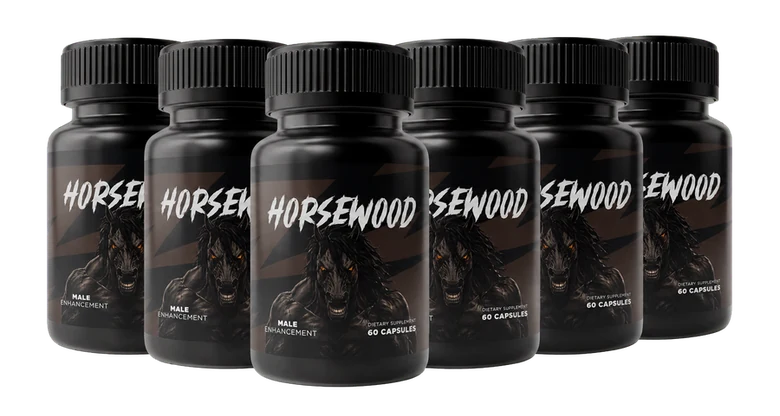
Horsewood six-bottle package at the official website sale price
Regular price: $99 per bottle
Today from $49 per bottle
Claim the Horsewood discount

Backed by the 60-day money-back guarantee. Secure checkout on the Horsewood official website.

Get the Horsewood Discount — From $49 60-day money-back guarantee • Official website only