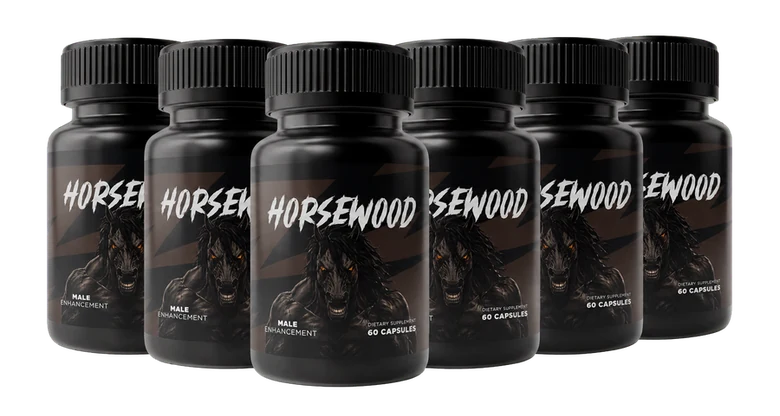
Regular price: $99 per bottle
Today from $49 per bottle
Claim the Horsewood discountBacked by the 60-day money-back guarantee. Secure checkout on the Horsewood official website.
Ashwagandha has been examined in randomised trials for perceived sleep quality alongside its stress-response measures, with modest positive findings. The proposed mechanism is indirect — a calmer stress response supporting easier sleep onset rather than any sedative action.
Some people report noticeable drowsiness from ashwagandha, which is a reason a minority prefer evening dosing.
Green tea extract carries naturally occurring caffeine. The amount is small, far below a cup of coffee, but it is not zero — and caffeine's half-life is five to six hours in most adults.
For most people this is irrelevant at a morning dose. For anyone genuinely caffeine-sensitive, an evening dose is a poor idea.
Morning with breakfast is the default for the great majority. It avoids the caffeine question entirely and anchors the habit to a meal you reliably eat.
If you find the formula makes you drowsy and you would rather have that at night, evening dosing is defensible — but test it on a night when a poor sleep would not matter.
A small number of people find any new supplement disturbs their sleep in the first week or two. If that happens, work through it systematically rather than abandoning the trial.
First, move the dose earlier. If you were taking it in the evening, switch to breakfast. This resolves the majority of cases, because the trace caffeine in green tea extract is the most likely culprit and it has a five-to-six hour half-life.
Second, audit your total caffeine. Adding any caffeine-containing product to an existing habit raises your total, and the effect is cumulative rather than isolated to the new item.
Third, give it ten days. Some initial disturbance settles as the body adjusts, and abandoning at day three does not distinguish a transient effect from a persistent one.
Fourth, if it persists past two weeks at a morning dose, stop. Sleep is worth more than any supplement in this category, by a wide margin, and trading it for a marginal energy benefit is a bad exchange on every measure.
A supplement sits below all six of those. Magnesium's role in normal muscle function and fatigue reduction is real, and ashwagandha's sleep-quality data is real, and both are marginal against a fixed wake time and a dark room.
If sleep is your primary complaint, fix the six first. They are free, and the Sleep Foundation covers what apnoea screening involves if you suspect that.
Neutral-to-mildly-positive on sleep at a morning dose. Ashwagandha's sleep-quality data is real but modest, and every item on a basic sleep-hygiene list outranks it.
Check the Horsewood discountMen's vitality capsules with zinc, magnesium, ashwagandha and bacopa. The Horsewood discount runs from $49 per bottle with a 60-day money-back guarantee.
See the Horsewood discountBacked by the 60-day money-back guarantee. Secure checkout on the Horsewood official website.